

Landlord's Legal Guide: 4 Mandatory Considerations for Protecting Tenant Rights When Selling Property
Imagine this scenario. A Sacramento investor closes escrow on a four-unit apartment building. A few weeks later, the new owner discovers his first inherited obligation: tenants claiming unreturned security deposits, now his legal responsibility. Next, he’s fielding questions about verbal agreements the previous owner allegedly made. Then, he realizes the building came with unauthorized occupants the previous owner tolerated – individuals who may now have tenant rights.
The new owner thought purchasing rental property meant acquiring an income stream. Instead, they inherited a complex web of tenant rights, lease obligations, and legal requirements that they didn't know existed and aren't sure how to resolve.
This issue recurs across California whenever rental properties change hands, raising a critical question: Do you understand California's tenant protection laws well enough to avoid costly mistakes when buying rental property?
Park Glen Management (PGM) has guided numerous property owners through ownership transitions. The difference between profitable acquisitions and legal nightmares often comes down to understanding what happens to existing tenants, leases, and obligations when properties sell. We are committed to helping property owners succeed, and we recognize that protecting tenant rights is essential for stable, profitable property operations.
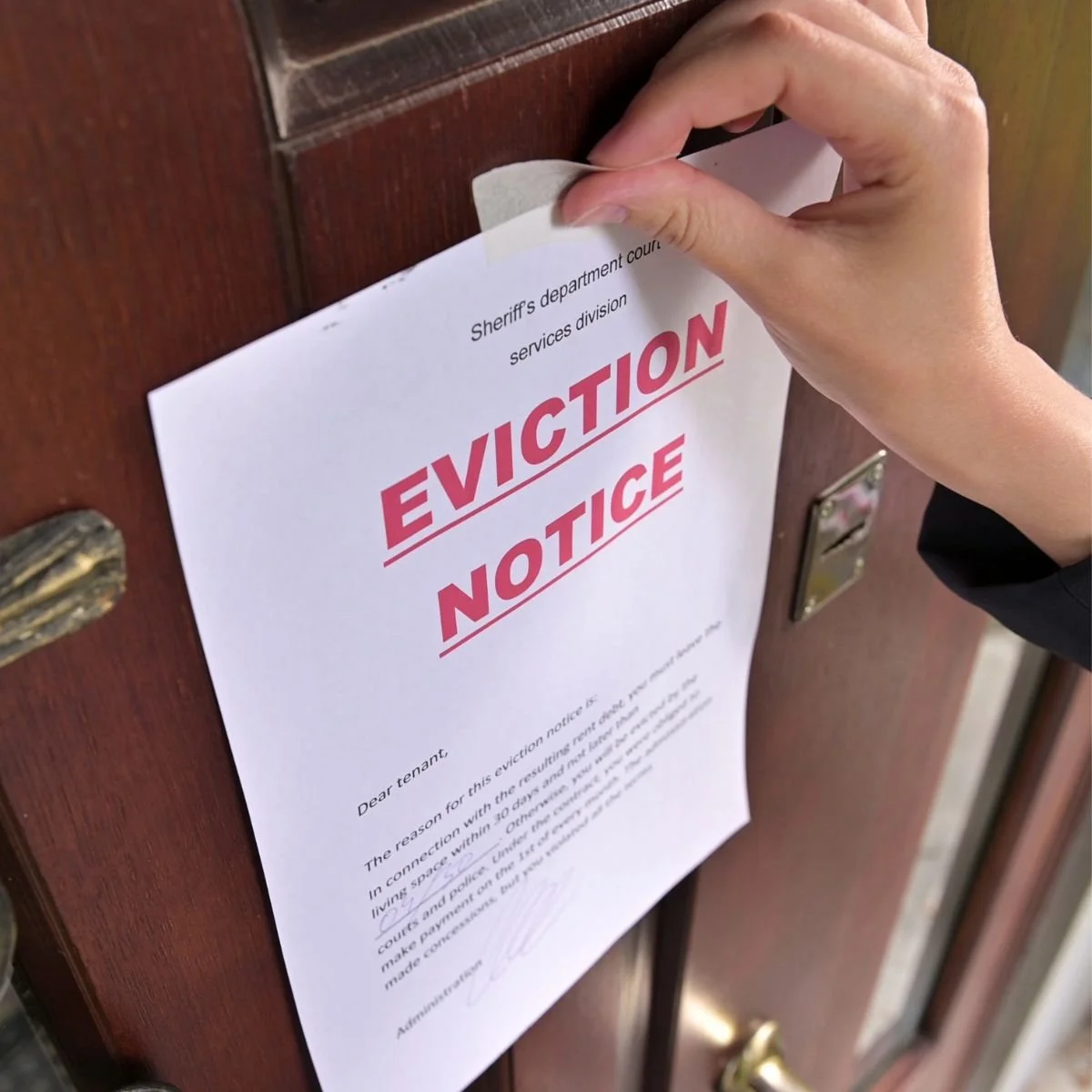
Can the new property owner evict a tenant?
Many new property owners assume they're starting fresh—new owner, new rules, new leases. California law says otherwise, and misunderstanding the state’s legal statutes creates the most expensive mistakes investors make.
The sale of rental property does not terminate existing leases. This protection, codified in California Civil Code Sections 1950.5 and 1961, means you legally step into the shoes of the previous owner the moment escrow closes. Every lease term, rent amount, pet agreement, and parking assignment is automatically transferred to you, whether you like them or not.
This succession of obligations operates by law, not by choice. Tenants don't need to sign new leases, agree to modified terms, or even consent to the change in ownership for their existing lease protections to continue. Understanding this principle prevents new owners from making demands that expose them to immediate legal liability.
Park Glen Management ensures seamless lease transitions by conducting comprehensive lease audits during property acquisitions. We verify that all existing lease terms comply with current California law and identify any problematic provisions that could expose new owners to liability. This due diligence protects both your investment and the tenant relationships that generate your rental income.
>>Read more: How to Create Effective Succession Planning for Family-Owned Properties
Month-to-month vs. fixed-term leases
California law distinguishes between fixed-term leases and month-to-month rental agreements, and this distinction determines what control you have over inherited tenancies.
Fixed-term leases
A fixed-term lease (typically 6 months or 1 year) creates a contract that binds both parties to a specific end date. When property sells during an active lease term, the new owner must honor the lease through its expiration date. The new owner cannot terminate the lease early simply because they acquired the property, nor can they require the tenant to sign a new agreement with different terms.
All provisions of the original lease remain enforceable through expiration: the monthly rent amount, pet policies, parking assignments, utilities responsibilities, maintenance obligations, and any special provisions negotiated between the tenant and previous owner. Attempting to modify these terms mid-lease exposes you to breach-of-contract claims and potential damages.
If a tenant has eight months remaining on a one-year lease when you purchase, those eight months continue under the exact terms originally agreed upon. You cannot increase rent or modify any lease provisions until the lease naturally expires. At expiration, the lease either converts to a month-to-month tenancy or the parties negotiate a new fixed-term lease, but the tenant cannot be coerced into accepting terms they find unacceptable.
Month-to-month tenancies
This type of rental agreement offers greater flexibility while still providing substantial tenant protections under California law. When you purchase property with tenants on these arrangements, you can terminate the tenancies, but only by following strict legal procedures that many new owners violate.
California Civil Code Section 1946 establishes baseline notice requirements:
30-day written notice if the tenant has resided in the unit for less than one year
60-day written notice if the tenant has resided in the unit for one year or more
You cannot circumvent these protections by claiming the agreement ended automatically upon sale. The tenancy continues uninterrupted until you properly terminate it through legal notice procedures. Attempting to force out tenants without proper notice constitutes illegal eviction and exposes you to substantial legal liability.
Just Cause eviction protections under AB 1482
Here's where new property owners make their most expensive mistakes: assuming they can "clear out" month-to-month tenants to start fresh or bring in their own preferred tenants.
California's Tenant Protection Act of 2019 (AB 1482) changed this.
This law, which took effect January 1, 2020, requires landlords to have "just cause" to terminate month-to-month rental agreements in most residential properties. AB 1482 applies to residential properties that are at least 15 years old, with specific exemptions for:
Single-family homes (unless owned by corporations, LLCs, or REITs)
Condominiums (unless owned by corporations, LLCs, or REITs)
Duplexes where the owner occupies one unit
For covered properties, you cannot simply give a 30 or 60-day notice and terminate month-to-month tenancies without reason. You must provide one of the "just causes" enumerated in the statute, which fall into two categories:
At-fault just causes (tenant-related issues):
Failure to pay rent
Breach of a material lease term
Nuisance behavior or damage to the property
Illegal use of the rental unit
Criminal activity on the premises
Refusal to sign a lease renewal with similar terms after the lease expires
No-fault just causes (owner-initiated reasons):
Owner or owner's immediate family intends to occupy the unit
Withdrawal of the property from the rental market (Ellis Act)
Government order requiring vacancy (major repairs, code violations)
Intent to demolish or substantially remodel the unit
When you use no-fault just causes to terminate month-to-month tenancies, AB 1482 requires you to pay relocation assistance equal to one month's rent minimum. This payment must be made within 15 days of serving the termination notice. Many California cities impose even higher relocation assistance payment requirements through local ordinances.
Navigating AB 1482's just cause requirements requires current legal knowledge and precise documentation. Park Glen Management's attorney-founded approach ensures that any termination proceedings meet California's strict eviction standards. We've successfully handled compliant evictions while protecting property owners from the costly mistakes that result from misunderstandings of just-cause requirements.
>>Read more: How to Evict a Tenant in California

Occupants and unauthorized tenants
When property changes hands, you need to scrutinize who actually lives in each rental unit. California law makes critical distinctions between authorized tenants, occupants listed on the lease, and guests. These distinctions affect everyone's rights when ownership transfers, and mishandling them creates legal exposure.
Authorized tenants are individuals whose names appear on the lease agreement. They hold full legal rights under the lease and cannot be removed without proper eviction proceedings. When property sells, all authorized tenants retain their lease rights regardless of whether the new owner approves of them.
Occupants include people living in the unit who aren't named on the lease but whose presence the landlord has acknowledged or approved. Common examples include the tenant's spouse or partner who moved in after the lease signing, or adult children who returned home. Occupants typically have some legal protections against sudden removal, though their status remains less secure than that of named tenants.
Guests are individuals visiting temporarily without establishing permanent residence. California law doesn't specify exact timeframes that transform guests into tenants, but factors include the length of continuous stay and whether:
the person receives mail at the address
they've established the unit as their primary residence
they contribute to rent or utilities
they have a key and come and go freely
>>Read More: How to Spot an Unauthorized Occupant Before They Gain Tenant Rights
You may challenge occupancy situations that previous owners tolerated, but doing so requires careful legal navigation. Attempting to remove long-term occupants without proper eviction procedures violates California law, even if those occupants never signed a lease. This creates liability for wrongful eviction.
These occupancy determinations require case-by-case legal analysis. Park Glen Management evaluates inherited occupancy situations during our property acquisition assessments, advising new owners on the legal status of all occupants and the proper procedures for addressing unauthorized occupancy. Our approach protects you from illegal eviction claims while ensuring tenant rights are respected – because honoring those rights protects your investment and is the right thing to do.
>>Read more: When Does a Guest Become a Tenant in California?
Understanding estoppel certificates
Smart property investors use estoppel certificates as a critical due diligence tool before closing escrow. An estoppel certificate is a document signed by the tenant that verifies key facts about their tenancy – facts you'll rely on when evaluating the property's value and your obligations as the new owner.
A properly executed estoppel certificate confirms:
The current rent amount and when it was last increased
The security deposit amount held by the landlord
The lease term and expiration date
Any verbal agreements or modifications to the written lease
Whether the tenant has any complaints or disputes with the landlord
Whether all rent has been paid and the tenancy is current
Without estoppel certificates, you're relying entirely on the seller's representations about tenant relationships, rent amounts, and deposit obligations. Sellers may misrepresent (intentionally or accidentally) the actual state of their tenant relationships. An estoppel signed by the tenant provides independent verification.
If a tenant later claims they had a verbal agreement for reduced rent that you didn't know about, the estoppel certificate confirming the higher rent amount protects you legally. If a tenant claims their security deposit was $3,000 but the estoppel confirms $2,000, you've limited your liability.

Can a new owner raise the rent?
New property owners frequently purchase rental properties with plans to increase revenue or reposition the property in the market. California law, however, imposes significant restrictions on both practices, particularly through AB 1482 and local rent control ordinances.
Rent increase restrictions under AB 1482 (Tenant Protection Act of 2019)
The Tenant Protection Act imposed the state's first statewide rent control provisions. Before AB 1482, only cities with local rent control ordinances limited rent increases. Now, most residential rental properties across California face statutory caps on annual rent increases.
AB 1482 limits annual rent increases to 5% plus the local Consumer Price Index (CPI), with a maximum total increase of 10% in any 12-month period. This means:
In areas where local CPI is 2%, landlords can increase rent by a maximum of 7% annually
In areas where local CPI is 5% or higher, landlords can increase rent by a maximum of 10% annually
The calculation uses the CPI for the region where the property is located
The 12-month period runs from the date of any rent increase, not the calendar year
These caps apply to properties that are at least 15 years old as of the date of the rent increase. A building constructed in 2011 would become subject to AB 1482's rent caps on January 1, 2026.
Important exemptions exist
Single-family homes and condominiums: AB 1482 exempts single-family homes and condominiums unless they are owned by:
Corporations
Limited liability companies (LLCs)
Real estate investment trusts (REITs)
Partnerships where at least one partner is a corporation
This means individually owned single-family homes and condos remain exempt from AB 1482's rent caps, but corporate-owned properties of the same type must comply. New property owners who purchase through LLCs (a common asset-protection strategy) inadvertently trigger AB 1482's requirements, even for single-family homes.
Properties with specific deed restrictions —such as affordable housing covenants, restrictions imposed by government agencies, and properties operated by educational institutions — may have different rules.
Duplexes where the owner occupies one unit: If the property owner lives in one of two units, the property is exempt from AB 1482.
Timing requirements for rent increases
The law establishes strict notice requirements based on the increased amount:
30-day advance written notice for rent increases of less than 10% of the lowest rent charged in the previous 12 months
90-day advance written notice for rent increases of 10% or more
New property owners cannot circumvent the 90-day requirement by implementing increases in stages. If a new owner plans a 15% increase over time, they must provide a 90-day notice, even if they structure it as two separate increases.
The 12-month waiting period between increases
As stated above, AB 1482 prohibits more than one rent increase in any 12-month period. If the previous owner increased rent six months before selling the property, you must wait another six months before implementing any additional increase, even though you just purchased the property.
Fixed-term leases and rent increases
Regardless of AB 1482's caps, landlords cannot increase rent during the term of a fixed-term lease unless the lease specifically provides for such increases (which are uncommon in residential leases). When property sells mid-lease, the tenant's rent remains unchanged until the lease expires. At this point, AB 1482's limitations apply to any increase proposed for a renewal term or month-to-month continuation.
Local rent control ordinances
Many California cities enacted rent control ordinances before AB 1482, and these local laws often provide stronger protections than the state statute. AB 1482 functions as a floor, not a ceiling; local jurisdictions can impose stricter limitations.
This principle applies throughout California rental property law: city, county, and state regulations may all apply to your property, and you must comply with whichever regulation offers the greatest protection to tenants. You cannot choose the most favorable law for yourself; you must follow the most restrictive.
Cities with established rent control include:
-
As of 2024, the city has implemented tenant protection measures that complement AB 1482, though it does not have traditional across-the-board rent control.
-
The Rent Stabilization Ordinance (RSO) covers buildings constructed before October 1, 1978, with annual increase limits typically lower than those in AB 1482. Properties built after this date are subject to AB 1482 if they're at least 15 years old.
-
The Residential Rent Stabilization and Arbitration Ordinance covers buildings constructed before June 13, 1979. The city's rent board sets annual allowable increases, typically in the 2-3% range, well below AB 1482's maximums.
-
The Rent Adjustment Ordinance covers most residential properties built before 1983, and the Rent Adjustment Program determines allowable increases using a CPI-based formula.
-
One of California's oldest rent control systems, covering most properties built before 1980, with annual allowable increases set by the Rent Stabilization Board.

When must a landlord pay relocation assistance?
Relocation assistance is a cash payment given to tenants forced to move for reasons beyond their control. However, the obligation to pay relocation assistance confuses many new property owners who don't understand when these payments are required or the consequences of failing to comply.
No-fault evictions trigger relocation requirements
The fundamental principle is straightforward: when landlords terminate tenancies for reasons unrelated to tenant wrongdoing, they must compensate displaced tenants for the disruption and costs of finding new housing.
Under AB 1482, landlords must pay relocation assistance when using any of the four no-fault just causes:
Owner or family member move-in: When the owner, spouse, domestic partner, children, grandchildren, parents, or grandparents intend to occupy the unit as a primary residence, the landlord must pay relocation assistance.
Withdrawal from the rental market (Ellis Act): When the owner decides to exit the rental business entirely by removing all units from the market, relocation assistance is required.
Substantial remodel requiring permits and vacancy: Major renovation work that requires building permits and cannot be completed with tenants in occupancy triggers relocation requirements. Simple cosmetic updates, painting, or minor repairs don't qualify; the work must be substantial enough to require permits and genuinely necessitate vacancy.
Government order requiring vacancy: Code enforcement actions, health and safety orders, or other governmental mandates requiring units to be vacated require relocation assistance. Even though the landlord didn't choose the vacancy requirement, the tenant still deserves compensation for the displacement they didn't cause.
At-fault evictions do NOT require relocation
When tenants are evicted for their own violations or failures, landlords have no obligation to pay relocation assistance. At-fault just causes include:
Failure to pay rent
Material lease violations
Nuisance behavior or property damage
Illegal use of the rental unit
Criminal activity on the premises
Refusal to sign a renewal lease with similar terms
Tenants who breach their lease obligations or engage in problematic behavior do not receive financial compensation when they're evicted for that misconduct.
Consequences of late payment
State law requires relocation assistance to be paid within 15 calendar days of the landlord's service of the termination notice. Failing to pay relocation assistance by the deadline can result in:
Invalid termination notice: Courts may rule that the termination notice is void if relocation assistance wasn't paid timely. The landlord must start the entire process over—serving a new notice and paying relocation assistance by the new deadline.
Tenant's right to remain: If the termination notice expires but the relocation payment isn't paid, tenants can claim the right to continue their tenancy. The landlord cannot proceed with the eviction.
Additional damages: Tenants may sue for breach of statutory obligations, potentially recovering actual damages, penalties, and attorney fees.
Forfeiture of right to evict: In some jurisdictions, failure to pay relocation assistance can permanently forfeit the landlord's right to evict for that particular just cause. The landlord cannot cure the defect by paying late; they've lost the ability to proceed with that eviction entirely.

California notice requirements for tenants after buying property
When ownership of rental property transfers in California, new owners must provide specific notices to tenants informing them of the change and establishing proper communication channels. These notice requirements serve important legal functions: they clarify who is legally responsible for the property, where tenants should direct rent payments and maintenance requests, and who controls security deposits. Failing to provide proper notice creates confusion, disrupts rent collection, and potentially exposes new owners to legal liability.
California law establishes both mandatory notice requirements and best practices that professional property managers routinely follow to ensure smooth ownership transitions.
The legal requirement: Notice of ownership transfer
California Civil Code Section 1962 requires new property owners to provide written notice to tenants when ownership changes. This notice must include specific information and be delivered within a reasonable timeframe after the ownership transfer completes.
The notice must inform tenants of:
New owner's name: The full legal name of the individual or entity that now owns the property. For properties owned by LLCs, corporations, or trusts, use the complete legal entity name exactly as it appears on the deed.
New owner's address: A physical street address where the owner can be served with legal documents. California law requires a street address for service of process. This address is where tenants (or their attorneys) can send legal notices, court filings, or other official correspondence.
Where to send rent payments: Clear instructions about where tenants should mail or deliver rent payments going forward. This might be:
The new owner's address
A property management company's address
A lock box address
Instructions for online payment portals
If payment methods change (for example, from mailing checks to a single address to using an online portal), the notice must clearly explain the new procedures.
Property manager information (if applicable): If the new owner hires professional property management, the notice should include:
Management company name
Contact person and phone number
Office address
Hours of operation
Emergency contact procedures
Effective date: When the ownership transfer took effect, tenants understand from what date they should direct all communications and payments to the new owner.
While California Civil Code Section 1962 doesn't specify an exact deadline, courts have interpreted "reasonable time" as approximately 15-30 days after ownership transfer. Providing notice within this window demonstrates good faith compliance.
>>Read more: What are Sacramento Property Management Companies' Duties and Responsibilities?
Security deposit transfer notification
Beyond the general notice of ownership transfer, California Civil Code Section 1950.5 creates a separate, specific requirement for security deposit notifications. This notice informs tenants who now holds their deposit money and how they can make deposit-related inquiries.
While the ownership transfer notice and security deposit notice can be combined into a single document, they serve different legal functions. The security deposit notice specifically addresses:
Confirmation that deposits transferred: Explicit statement that the new owner received all security deposits from the previous owner, including the specific dollar amounts for each tenant. This prevents tenants from worrying that their deposits disappeared during the transfer of ownership.
New owner's responsibility: Clear statement that the new owner now holds legal responsibility for returning the deposit at the end of the tenancy in compliance with California's 21-day return requirement and itemization rules.
How to contact the owner about deposits: Specific contact information for security deposit matters, which might differ from general maintenance or rent payment contacts.
Interest obligations (if applicable): In jurisdictions that require landlords to pay interest on security deposits (such as San Francisco), the notice should confirm that interest obligations continue and explain how interest will be calculated and paid.
The PGM advantage in ownership transitions
Property ownership transitions are among the most legally complex and high-risk situations in California rental housing. You face unfamiliar regulations, inherited tenant relationships, and substantial financial and legal risks. A single misstep (e.g., improper notice, miscalculated relocation payment, unlawful rent increase) can escalate into expensive litigation, regulatory penalties, and damaged investments.
Park Glen Management was co-founded and continues to be operated by a real estate attorney who understands California landlord-tenant law at a depth most property management companies cannot match. This legal foundation permeates every aspect of our operations, from tenant communications to lease documentation to eviction proceedings.
Our attorney-operated approach means
Proactive compliance rather than reactive problem-solving: We identify legal requirements before they become violations rather than scrambling to fix problems after tenants file complaints or lawsuits.
Current knowledge of changing regulations: California rental housing law evolves constantly through new legislation, court decisions, and regulatory agency guidance. Our legal background ensures we track these changes systematically and adapt our procedures immediately when requirements change.
Credible tenant communication: When we explain tenants' legal rights and obligations, we speak with authority, backed by genuine legal knowledge. Tenants recognize this credibility, reducing disputes and increasing cooperation during transitions.
Effective resolution of complex situations: Inherited tenant problems (lease ambiguities, deposit disputes, unauthorized occupants, maintenance backlogs) require legal judgment to resolve properly. Our attorney background enables solutions that protect owner interests and safeguard tenant rights.
Park Glen Management provides California rental property owners with the legal expertise, operational experience, and professional systems needed for compliant, profitable operations – from acquisition through complex sales.
Let's start a conversation about how Park Glen Management can protect and grow your real estate investments.
📞 Call: (916) 269 - 9288
✉️ Email: hello@parkglenmanagement.com
🌐 Visit: www.parkglenmanagement.com