

Emotional Support Animals in Housing: The Ultimate Landlord Guide to FHA Compliance
Consider this scenario: A Sacramento property manager receives a rental application from a qualified tenant with stable income, excellent credit, and strong references. The property enforces a strict no-pets policy clearly stated in the lease. Three days after move-in, the tenant brings a 70-pound German Shepherd into the unit.
When confronted, the tenant produces an "emotional support animal" letter from an online provider they met once via video chat. The letter contains generic language and was dated three days before move-in. The manager doesn't know how to evaluate whether this documentation meets legal requirements.
Rather than engaging in the required process to evaluate the accommodation request, the manager immediately sends a lease violation notice and initiates eviction proceedings. The tenant files a federal fair housing complaint. Now, the property owner faces a federal investigation, thousands of dollars in potential fines, and attorney fees that could exceed the property's annual rental income.
The legal landscape surrounding service animals and emotional support animals has become one of the highest-risk areas in residential property management. Federal law, state law, and local ordinances create overlapping requirements. This raises a critical question for every California property owner and manager: Do you understand assistance animal laws well enough to avoid expensive discrimination claims while still protecting your property from fraudulent requests?
Park Glen Management has helped property owners with assistance animal requests over the years, from straightforward service dog accommodations to complex situations involving multiple animals, exotic species, and questionable documentation. The difference between confident, compliant responses and costly legal mistakes comes down to understanding what the law actually requires, what documentation you can legally request, and when you have legitimate grounds to deny an accommodation request. We are committed to helping property owners operate profitably and legally, and we recognize that properly handling assistance animal requests protects both tenant rights and property owner interests.
What animal categories should I be aware of?
Most landlords operate under a dangerous misconception: they believe all animals in rental properties fall into one of two categories. Either an animal is a pet subject to pet policies, deposits, and restrictions, or it's a "service animal" that must be allowed without question. This oversimplification causes most of the legal problems property owners face.
The reality is more complex. Federal law, California law, and legal precedent recognize at least three distinct categories of animals, each with different legal protections and requirements for landlords.
Service Animal
Emotional Support Animal (ESA)
Assistance Animal
What is a service animal?
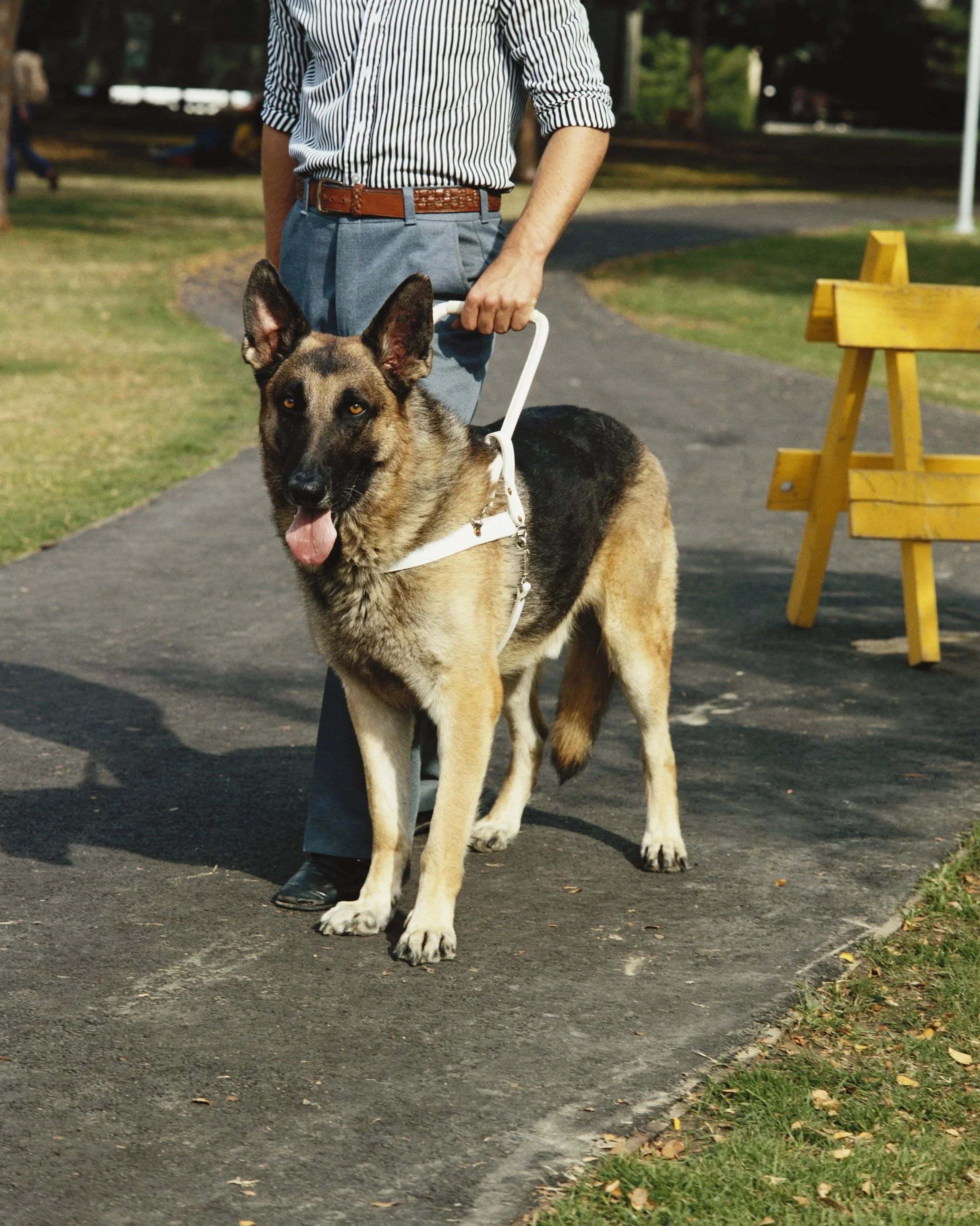
Service animals are dogs (and in rare cases, miniature horses) that have been individually trained to perform specific tasks directly related to a person's disability. Examples of service animal tasks include:
Guiding a person who is blind
Alerting a person who is deaf to sounds
Pulling a wheelchair
Retrieving dropped items for someone with limited mobility
Alerting to oncoming seizures
Reminding a person to take prescribed medications
Service animals receive the strongest legal protections under the Americans with Disabilities Act. Landlords have almost no authority to restrict service animals or require documentation proving their status.
What is an emotional support animal?
Emotional support animals are any species of animal that provides therapeutic benefit to a person with a mental or emotional disability through companionship and presence. Unlike service animals, emotional support animals do not require specialized training or perform specific tasks. A person with depression, anxiety, PTSD, or other mental health conditions may need an emotional support animal as part of their treatment.
Key distinctions for landlords:
Protected under the Fair Housing Act but not under the ADA
Landlords can require documentation from healthcare providers
No pet fees or deposits can be charged
Species is not limited to dogs
What is an emotional assistance animal?
Assistance animal is an umbrella term used in California law and fair housing regulations that encompasses both service animals and emotional support animals, as well as potentially other animals that assist people with disabilities. This term appears throughout California's Fair Employment and Housing Act and in guidance from the Department of Housing and Urban Development.
Why do these distinctions matter?
Your rights and obligations as a landlord differ substantially depending on which category applies:
Questions you can legally ask about an emotional support animal would constitute illegal discrimination if asked about a service animal
Documentation that you can require for an ESA cannot be demanded for a service dog
Restrictions you might successfully defend for an exotic animal kept as an emotional support animal would be indefensible if applied to a trained service dog
Common mistakes property owners make
Property owners who fail to recognize these distinctions make predictable errors:
Demanding documentation for service animals when no documentation can be required
Treating emotional support animals like pets and charging deposits or fees
Applying breed restrictions to emotional assistance animals that receive legal protection from such restrictions
Denying accommodation requests using reasoning that has no legal basis
Understanding which animal category you're dealing with must be the first step in every response to an assistance animal request. This determination drives every subsequent decision about documentation, verification, approval, and any rules that apply to the animal's presence on your property.
Park Glen Management's systems begin by correctly categorizing each emotional assistance animal request according to the applicable legal framework. We train our staff to recognize the critical distinctions between service animals, emotional support animals, and other assistance animals. This foundational knowledge prevents the most common and costly mistakes property managers make when responding to these requests. Our attorney-founded approach ensures that we apply the correct legal standard to each situation rather than using a one-size-fits-all approach that inevitably leads to violations.

When must you allow animals in your property despite no-pet policies?
Property owners invest considerable time and resources in establishing pet policies. They calculate pet deposits based on estimated damage costs. They research breed restrictions. They draft detailed pet addenda specifying weight limits, species restrictions, and vaccination requirements. Then they encounter their first assistance animal request and discover that most of their carefully crafted pet policy is legally irrelevant.
Federal and California law require landlords to provide "reasonable accommodations" for people with disabilities, and allowing emotional assistance animals in housing that otherwise prohibits pets is among the most common reasonable accommodations required by law. This requirement applies even when you have legitimate business reasons for your no-pets policy. Your concerns about property damage, other residents' allergies, insurance costs, or prior bad experiences with pets do not override the federal Fair Housing Act or California's Fair Employment and Housing Act.
The Federal Fair Housing Act
The Fair Housing Act prohibits housing discrimination based on disability. Under this law, landlords must make reasonable accommodations in rules, policies, practices, or services when such accommodations are necessary to afford a person with a disability equal opportunity to use and enjoy a dwelling.
For assistance animals, this means:
No-pet policies must be waived for legitimate assistance animals
Pet deposits and pet fees cannot be charged
Breed restrictions cannot be applied
Weight limits cannot be enforced
Species restrictions may be questioned only in extreme circumstances
Exemptions
The FHA applies to nearly all rental housing with very limited exceptions. If you own a single-family home rented without using a real estate agent and you own three or fewer such homes, you may be exempt. If you rent rooms in an owner-occupied building with four or fewer units, you may be exempt. These exemptions are narrow and rarely apply to professional property management operations.
California's Fair Employment and Housing Act (FEHA)
California law extends even further than federal requirements. The Fair Employment and Housing Act provides broader protections for people with disabilities. It applies to nearly all housing in California, regardless of the limited exemptions that might apply under federal law.
FEHA's definition of disability is more expansive than the federal definition. California law protects people with physical disabilities, mental disabilities, and medical conditions. The definition includes conditions that limit major life activities, conditions that are perceived as limiting even if they don't actually limit activities, and a history of conditions that previously limited activities.
Importantly, California law does not require that a disability be severe or permanent to warrant protection. Temporary conditions, episodic conditions, and conditions in remission can all qualify as disabilities under California law if they limit major life activities when active.
The Reasonable Accommodation Framework in housing
Both federal and California law require landlords to provide reasonable accommodations unless doing so would create an undue burden or fundamental alteration of operations. This framework operates through a process rather than through automatic approvals or denials.
When a tenant or applicant requests to keep an emotional assistance animal despite your no-pets policy, you must engage in what the law calls an "interactive process" to determine:
Whether the person has a disability as defined by law
Whether the animal is necessary to afford the person equal opportunity to use and enjoy the dwelling
Whether allowing the animal would be reasonable or would instead create an undue burden
You cannot simply deny the request because you have a no-pets policy. The entire point of reasonable accommodation law is that policies must be modified when necessary to accommodate people with disabilities. Your policy is not a defense against a legitimate accommodation request.
When accommodations are not reasonable
Not every request must be granted. The law recognizes limits to the accommodation requirement. You can deny a request that would create:
Undue financial or administrative burden: If accommodating the request would require excessive expense or substantially change how you operate your business, the accommodation may not be reasonable.
Courts evaluate undue burden relative to the housing provider's resources and operations. For large property management companies managing hundreds of units, accommodating a single assistance animal rarely constitutes undue burden. For individual landlords with limited resources, the standard considers their specific circumstances. However, the bar remains high – routine costs of allowing animals (potential damage, cleaning) don't qualify as undue burden since landlords can charge for actual damage beyond normal wear.
Direct threat to health or safety: If the specific animal in question poses a direct threat to the health or safety of others that cannot be eliminated through reasonable modifications, you can deny the request. This requires evidence about the specific animal, not generalizations about breeds or species. You need documentation of aggressive behavior, not assumptions based on breed stereotypes.
Park Glen Management evaluates accommodation requests using HUD-compliant procedures that properly assess these factors. We know which questions to ask, what documentation to request, and how to document decisions in ways that withstand regulatory scrutiny. Our experience processing hundreds of assistance animal requests means we quickly recognize legitimate requests while also identifying those that lack proper documentation or a legal basis for approval.

Service animals under the ADA
Service animals occupy a unique position in disability law because they receive protections under both the Americans with Disabilities Act and the Fair Housing Act. This dual protection creates the strongest legal safeguards for any type of emotional assistance animal, and it means landlords have extremely limited authority to question, restrict, or verify service animals.
The ADA explicitly prohibits requiring documentation for service animals in most circumstances. Violating this prohibition triggers immediate legal exposure.
The two questions landlords can legally ask
When someone has a service animal that is obviously a dog, and it is clear that the dog is trained to perform tasks related to a disability, you cannot ask any questions at all. For example, if someone who uses a wheelchair has a dog trained to assist with mobility, no inquiry is permitted.
When the disability is not obvious, or the animal's training is not apparent, the ADA permits exactly two questions:
“Is the dog a service animal required because of a disability?”
”What work or task has the dog been trained to perform?”
These questions must be phrased carefully. You cannot ask about the nature or extent of the person's disability. You cannot ask for medical documentation. You cannot ask for proof of certification or training. You cannot ask the person to demonstrate what the dog does.
The person's answer to the second question must describe actual work or tasks. If they respond that the dog provides comfort or emotional support through its presence, that describes an emotional support animal, not a service animal. Service animals perform specific actions, such as guiding and navigating, alerting to sounds, retrieving objects, interrupting harmful behaviors, or applying pressure during anxiety attacks.
Questions you CANNOT ask
The following questions and requests are explicitly prohibited when dealing with service animals:
Asking for documentation of the disability
Requiring a doctor's letter or prescription
Requesting proof of training or certification
Demanding to see the dog perform its tasks
Asking about the specific nature of the person's disability
Requiring the dog to wear a vest or special identification
Requesting registration papers or certificates
Asking where the dog was trained
Many landlords make mistakes here because online companies sell service animal certifications, vests, and identification cards. These items have no legal significance. The ADA does not recognize any certification or registration for service animals. Requesting such documentation demonstrates a misunderstanding of the law and creates liability.
Unlike emotional support animals, service animals require no documentation in housing contexts. None. The person does not need a letter from a healthcare provider. They do not need training certificates. They do not need to show you anything beyond answering the two permitted questions if the disability or training is not obvious.
When service animals can be removed
Service animals receive strong legal protections, but these protections are not absolute. You can require the removal of a service animal in specific circumstances:
The animal is out of control, and the handler does not take effective action to control it: If a service dog is barking repeatedly, jumping on people, or behaving aggressively, and the handler cannot or will not control the behavior, you can ask that the animal be removed from the premises. The person with the disability must be allowed to obtain goods or services without the animal present.
The animal is not housebroken: Service animals must be housebroken. If a service animal repeatedly urinates or defecates in inappropriate locations and the handler is not taking corrective action, you can require the removal of the animal.
The animal poses a direct threat to the health or safety of others: This requires evidence of actual threatening behavior by the specific animal, not assumptions based on breed or size. You need documented incidents, not generalized fears.
Even in such circumstances, your response must be measured. You address the behavior problem, not the presence of the service animal categorically. If the person can resolve the behavior issue, the service animal can return. You cannot use a single incident to permanently ban a service animal unless the incident involved serious injury or the person demonstrates an inability to control the animal going forward.
Breed and size restrictions do not apply to service animals
Many property owners maintain breed restrictions in their pet policies, typically targeting breeds perceived as aggressive or dangerous. These restrictions categorically do not apply to service animals.
You cannot refuse a service animal because it is a pit bull, Rottweiler, German Shepherd, Doberman, or any other breed included in your restrictions. Federal and California law prohibit discrimination against service animals based on breed. Insurance company restrictions do not override these legal protections. Your concern about liability does not justify breed restrictions on service animals.
Similarly, size and weight restrictions in your pet policy do not apply to service animals. A person who needs a large dog for mobility assistance cannot be denied access because the dog exceeds the pet weight limit.

Emotional support animals in housing
Emotional support animals create more confusion for landlords than any other category of assistance animal. Unlike service animals, ESAs do not perform trained tasks. Unlike pets, ESAs cannot be denied simply because you have a no-pets policy. The documentation requirements fall somewhere between these extremes, and misunderstanding where that middle ground lies leads to costly mistakes.
Property owners make errors in both directions. Some demand excessive documentation that violates fair housing law. Others accept obviously fraudulent documentation because they fear being accused of discrimination. Both approaches create legal exposure.
ESAs are NOT service animals
This distinction cannot be emphasized enough, as tenants, landlords, and even some attorneys regularly confuse these categories. Emotional support animals operate under completely different legal frameworks than service animals.
Service animals are protected by the ADA and perform trained tasks. Emotional support animals are protected by the Fair Housing Act and provide therapeutic benefits through their presence and companionship. This difference determines what questions you can ask and what documentation you can require.
An emotional support animal might be a dog, cat, bird, rabbit, or another common pet. The animal does not need specialized training. The animal's therapeutic value comes from the bond between the person and the animal, not from any specific tasks it performs.
If someone tells you their dog alerts them to anxiety attacks by licking their face or applying pressure, that sounds like task-based behavior. You should evaluate whether that describes a service animal rather than an emotional support animal. If the person describes only that the animal's presence reduces their symptoms or provides comfort, that describes an ESA.
If you're uncertain whether an animal's behavior constitutes trained tasks (making it a service animal) or emotional support (making it an ESA), err on the side of treating it as a service animal and do not request documentation. You can note your observations and consult with legal counsel or experienced property management professionals to determine the proper classification. Misclassifying a service animal as an ESA and demanding documentation creates immediate ADA liability.
What documentation landlords CAN require for emotional support animals
Unlike service animals, landlords can require documentation for emotional support animals. The Department of Housing and Urban Development has issued specific guidance on what constitutes acceptable documentation and what requests exceed legal bounds.
You can require a letter or other documentation from a licensed healthcare provider that includes:
The provider's professional credentials: The letter must identify that the person writing it is a licensed healthcare professional qualified to treat the disability in question. This includes physicians, psychiatrists, psychologists, licensed clinical social workers, licensed professional counselors, and other mental health professionals operating within their scope of practice.
Confirmation that the tenant has a disability: The provider must confirm that the person requesting the accommodation has a disability as defined by fair housing law. The provider does not need to disclose the specific diagnosis or provide detailed medical information. A statement that the person has a mental health disability or condition that substantially limits one or more major life activities is sufficient.
Connection between the disability and the animal: The provider must explain that the animal is necessary as a reasonable accommodation for the person's disability-related needs. The provider should describe how the animal ameliorates symptoms or effects of the disability.
Sufficient detail to evaluate the request: The documentation must provide enough information for you to understand that the request is disability-related and that the animal provides disability-related assistance. Generic statements that "pets are good for people" or "animals provide companionship" are insufficient.
The documentation does not need to be on a specific form. It does not need to use particular magic words. It can be a letter on professional letterhead, a note from a patient file, or other written verification. What matters is that it contains the necessary elements described above.
What happens when emotional support animal documentation is insufficient
If documentation lacks the necessary elements, you can request additional information or clarification. Your request must specify what is missing or unclear. You cannot simply reject documentation because it does not look how you expected or because you are unfamiliar with the provider.
Examples of appropriate requests for additional information:
“The letter does not explain how the animal assists with your disability. Please provide documentation that describes the connection between the animal and your disability-related needs.”
”The provider’s credentials are not listed in the letter. Please confirm that the provider is licensed to diagnose and treat mental health conditions in California.”
”The letter appears to be a form letter. Please provide documentation that shows the provider has evaluated your specific circumstances and determined that you specifically need this animal. ”
Examples of inappropriate demands that exceed your authority:
“Provide your complete medical records so we can verify your diagnosis.”
”Have your doctor use our form instead of their own letterhead.”
”Get a letter from a psychiatrist instead of a licensed therapist.”
”Prove that you have tried other treatments before requesting an emotional support animal.”
Navigating ESA verification requires specialized knowledge that evolves as HUD issues new guidance and courts issue new rulings. Property owners who attempt to handle these requests without professional systems risk either approving fraudulent requests that expose the property to problems or denying legitimate requests that trigger discrimination complaints. This complexity is precisely why professional property management delivers value far beyond its cost.
>>Read more: Why Having a Property Management Agreement is Important
Park Glen Management's verification protocols comply with current HUD guidance while protecting property owners from both fraudulent requests and discrimination liability. Our attorney-founded approach means we understand the difference between legitimate scrutiny of inadequate documentation and illegal demands for information that landlords have no right to receive. We know which questions to ask, how to phrase requests for additional information, and when documentation crosses the line from questionable to clearly insufficient. This expertise protects you from approving problems while ensuring you do not violate fair housing law by demanding documentation you cannot legally require.

Can you charge fees or deposits for assistance animals?
No. You cannot charge pet deposits, pet fees, pet rent, or any other animal-related charges for legitimate emotional assistance animals. This restriction applies regardless of your property's pet policy, regardless of the size or species of the animal, and regardless of your concerns about potential damage.
You also cannot require tenants with emotional assistance animals to carry special liability insurance, renters insurance with animal coverage, or any other insurance you do not require of all tenants, regardless of whether they have animals.
Both federal and California law prohibit these charges. Many landlords understand this rule intellectually but still attempt to impose animal-related charges through creative approaches. These attempts fail legally and create discrimination complaints. Understanding why you cannot charge these fees and what you can do about damage concerns helps prevent costly violations.
What you CAN charge for: Actual damage
While you cannot charge fees or deposits specifically for assistance animals, you retain the right to charge for actual damage that an assistance animal causes to your property beyond normal wear and tear. This is a critical protection that many landlords do not fully utilize because they assume they have no recourse for animal damage when assistance animals are involved.
The security deposit you collected from the tenant (the same standard security deposit all tenants pay) can be used to repair damage caused by the assistance animal. California's security deposit law applies in the normal way. You must follow the same procedures for documenting damage, providing itemized statements, and returning deposits that apply to all tenancies.
What constitutes chargeable damage:
Scratched or gouged doors, walls, or floors
Carpet damage beyond normal wear (stains, tears, excessive pet hair requiring professional cleaning)
Damaged window screens or blinds
Chewed baseboards, door frames, or furniture
Damage to landscaping or outdoor areas
Excessive cleaning required due to pet odors, waste, or dander
What does not constitute chargeable damage:
Normal wear and tear from the animal's presence
Minor scuffs or marks consistent with regular use
Ordinary depreciation of carpet or flooring
Cleaning that would be required regardless of whether an animal lived in the unit
The key is documentation. You must prove that the damage exceeds normal wear and tear and that the animal caused the damage. This requires thorough move-in and move-out inspections with detailed photos and descriptions.
While you cannot charge pet deposits or pet fees for assistance animals, you retain the right to deduct from the tenant's standard security deposit for any damage the animal causes beyond normal wear and tear. This is why thorough move-in documentation is critical. You need clear evidence of the unit's condition before the animal arrived to distinguish new damage from pre-existing issues.
>>Read more: What does a security deposit cover?
Park Glen Management documents unit conditions thoroughly during move-in inspections, creating the photographic and written evidence necessary to support legitimate damage claims while protecting property owners from disputes over normal wear and tear. We understand the difference between damage you can legally charge for and normal wear that you must absorb as part of ordinary operations.
What if the animal causes problems in the property?
Allowing assistance animals as reasonable accommodations does not mean you surrender all authority to address the problems those animals may cause. Tenants with emotional assistance animals must still comply with reasonable rules, and animals that create genuine problems can be subject to action despite their protected status. Understanding the boundaries of your authority prevents both tolerating serious problems and taking action that violates fair housing law.
Many landlords believe that once they approve an assistance animal, they have no recourse if the animal barks constantly, acts aggressively, or creates unsanitary conditions. This belief is incorrect and causes property owners to tolerate situations they could legally address. Other landlords attempt to remove emotional assistance animals for minor complaints or normal animal behavior, triggering discrimination claims. Both approaches create problems.
Federal and California law require reasonable accommodations for people with disabilities. The word "reasonable" applies to the ongoing conduct of the accommodation, not just to the initial approval. An assistance animal that poses genuine threats to safety, creates health hazards, or substantially interferes with other residents' quiet enjoyment can be subject to restrictions or removal.
The key is to focus on behavior and impact, not on the mere presence of the animal or on assumptions about what might happen. You must have evidence of actual problems, not fears about potential problems.
Can a landlord limit the number of emotional support animals in the property?
Property owners who successfully navigate a request for one emotional assistance animal sometimes find themselves facing requests for additional animals months or years later. These situations create unique challenges because you must evaluate each animal separately while considering the cumulative impact of multiple animals on your property and operations.
The legal framework for multiple assistance animals is, in principle, identical to that for single animals but more complex in application. Each animal must be evaluated under the reasonable accommodation standard. However, what is reasonable for one animal may not be reasonable for two, three, or more animals.
Each animal requires a separate justification
When a tenant requests accommodation for multiple assistance animals, you cannot approve or deny the request as a package. Each animal must have separate documentation establishing that the specific animal is necessary to accommodate the person's disability.
Requirements for multiple animal requests:
Individual necessity for each animal: The healthcare provider's documentation must explain why the person needs multiple animals rather than a single animal. If both animals provide identical assistance, you can question whether both are truly necessary. If each animal serves different functions or addresses different aspects of the disability, both may be necessary.
Separate documentation: While a single letter can address multiple animals, it must specifically discuss each one and explain each animal's role. Generic statements such as "the patient needs emotional support animals" without differentiating among specific animals are insufficient.
Species and characteristics matter: If a person requests two dogs, two cats, or animals of the same species, the documentation should explain why multiple animals of that species are necessary. If a person requests animals of different species, the documentation should explain why different types of animals are needed.

When multiple animals may not be reasonable
You can deny requests for multiple animals if granting the full request would not be reasonable. However, you must still consider whether approving fewer animals than requested would be an effective accommodation.
Scenarios where multiple animals may exceed reasonable accommodation:
-
A request for five, ten, or more animals raises legitimate questions about whether that number is necessary and whether accommodating all of them is reasonable. Healthcare documentation claiming someone needs ten emotional support animals warrants scrutiny of each animal's necessity.
-
A request for multiple large animals in a small studio apartment may not be reasonable, given space constraints and the impact on the unit's habitability. The same request in a large single-family home might be perfectly reasonable.
-
Some combinations of species create management challenges or potential dangers. A request for both cats and dogs, or for predator and prey species, may create concerns about the animals' welfare and the tenant's ability to manage them safely.
-
A tenant who initially requested one animal, then a second, then a third, and continues to add animals may be exceeding the bounds of reasonable accommodation. Each request must still be evaluated individually, but the pattern can inform your assessment of reasonableness.
The PGM advantage in assistance animal management
Assistance animal requests represent one of the most legally complex and high-risk situations California property owners and managers face. A single misstep in how you respond to a service animal inquiry, what documentation you request for an emotional support animal, or which questions you ask can trigger federal fair housing complaints, state civil rights investigations, and litigation that costs far more than any legitimate concern about property damage or operational burden.
Park Glen Management was co-founded and continues to be operated by a real estate attorney who understands fair housing law, disability discrimination protections, and emotional assistance animal regulations at a depth most property management companies cannot match. This legal foundation permeates every aspect of how we handle accommodation requests, from the initial inquiry through documentation review, approval decisions, ongoing management, and resolution of problems when they arise.
Our attorney-operated approach to property management means
Proactive compliance rather than reactive problem-solving: We identify legal requirements and potential issues at the beginning of the process, not after tenants file complaints or regulators initiate investigations. We know which questions to ask and which questions expose you to liability. We understand documentation standards that comply with HUD guidance while protecting against fraudulent requests.
Current knowledge of evolving regulations: Assistance animal law changes constantly through new HUD guidance, court decisions, regulatory agency interpretations, and legislative amendments. Most property managers learn about these changes when they violate them. We track regulatory developments systematically and adapt our procedures immediately when requirements change. Our legal background ensures we understand not just what the current rules are but how courts and agencies interpret them in practice.
Credible tenant communication: When we explain to tenants why we need specific documentation, what information we can and cannot request, or what rules apply to their emotional assistance animals, we speak with authority backed by genuine legal knowledge. Tenants and their advocates recognize this credibility. Our communications reduce disputes and increase cooperation because people understand we know the law and apply it fairly.
Effective resolution of complex situations: Multiple animal requests, exotic species, questionable documentation, mid-tenancy accommodation changes, and problem animals all require legal judgment to handle properly. Generic property management approaches that treat all assistance animals the same way inevitably lead to violations. Our attorney-founded expertise enables us to evaluate each situation against the appropriate legal standards, document our decisions to withstand scrutiny, and protect your interests while respecting tenant rights.
Defensible denial decisions: When we deny accommodation requests, we do so based on legitimate grounds that will survive fair housing complaints and litigation. We have successfully defended property owners against discrimination claims by demonstrating that denials were supported by evidence, based on reasonable accommodation analysis, and consistent with how we handle similar situations. This track record protects you from both the liability arising from wrongful denials and the problems that come from approving every request, regardless of its legitimacy.
What this means for your property operations
Handling assistance animal requests correctly protects your investment in multiple ways. You avoid the six-figure penalties, litigation costs, and reputational damage that come from fair housing violations. You maintain positive relationships with tenants who have disabilities by treating their accommodation requests with the professionalism and respect they deserve. You protect your property from fraudulent requests that would bring problem animals into your buildings. You address legitimate concerns about animal behavior, property damage, and other residents' rights without violating fair housing law.
If you face assistance animal requests in your California rental properties, the question is not whether you will encounter legal complexity. The question is whether you have the specialized knowledge needed to navigate that complexity without making expensive mistakes. Park Glen Management provides that knowledge, backed by the legal foundation that most property management companies lack.
Let's start a conversation about how Park Glen Management can protect and grow your real estate investments.
📞 (916) 269 - 9288
✉️ hello@parkglenmanagement.com
🌐 www.parkglenmanagement.com