

How a California Landlord Should Handle a Mold Complaint in 2026
A Sacramento rental property landlord received a text from one of their tenants: there was black discoloration spreading across the bathroom ceiling. The landlord assumed it was surface mildew, rather than mold spreading in a rental unit, told the tenant to try a bleach spray, and moved on. Unfortunately, he wasn’t knowledgeable about the steps to handle a mold complaint.
The tenant sent a follow-up two weeks later with photos showing the growth had spread to the wall beside the shower. The landlord scheduled a handyman to come the following month. By the date the service call was scheduled, the tenant had already contacted a tenant's rights organization, filed a complaint with Sacramento Code Enforcement, and stopped paying rent. What the landlord had treated as a maintenance nuisance had become a code violation, a rent withholding dispute, and the foundation of a habitability lawsuit — all within sixty days of that first text.
This is not unusual. Mold in rental property complaints are among the most litigated implied warranty of habitability issues in California, and the landlords who end up in the most serious legal trouble are rarely the ones who knowingly ignored a severe infestation. They are the ones who underestimated what the law requires, didn’t know how to respond to a tenant mold complaint, or failed to document what they did. California's mold statutes are specific, the tenant remedies are broad, and the procedural exposure compounds quickly once a complaint is filed.
Park Glen Management (PGM) was co-founded by a real estate attorney and treats mold as a compliance issue from the moment a complaint is received, rather than a maintenance task to be scheduled at the convenience of the property owner.
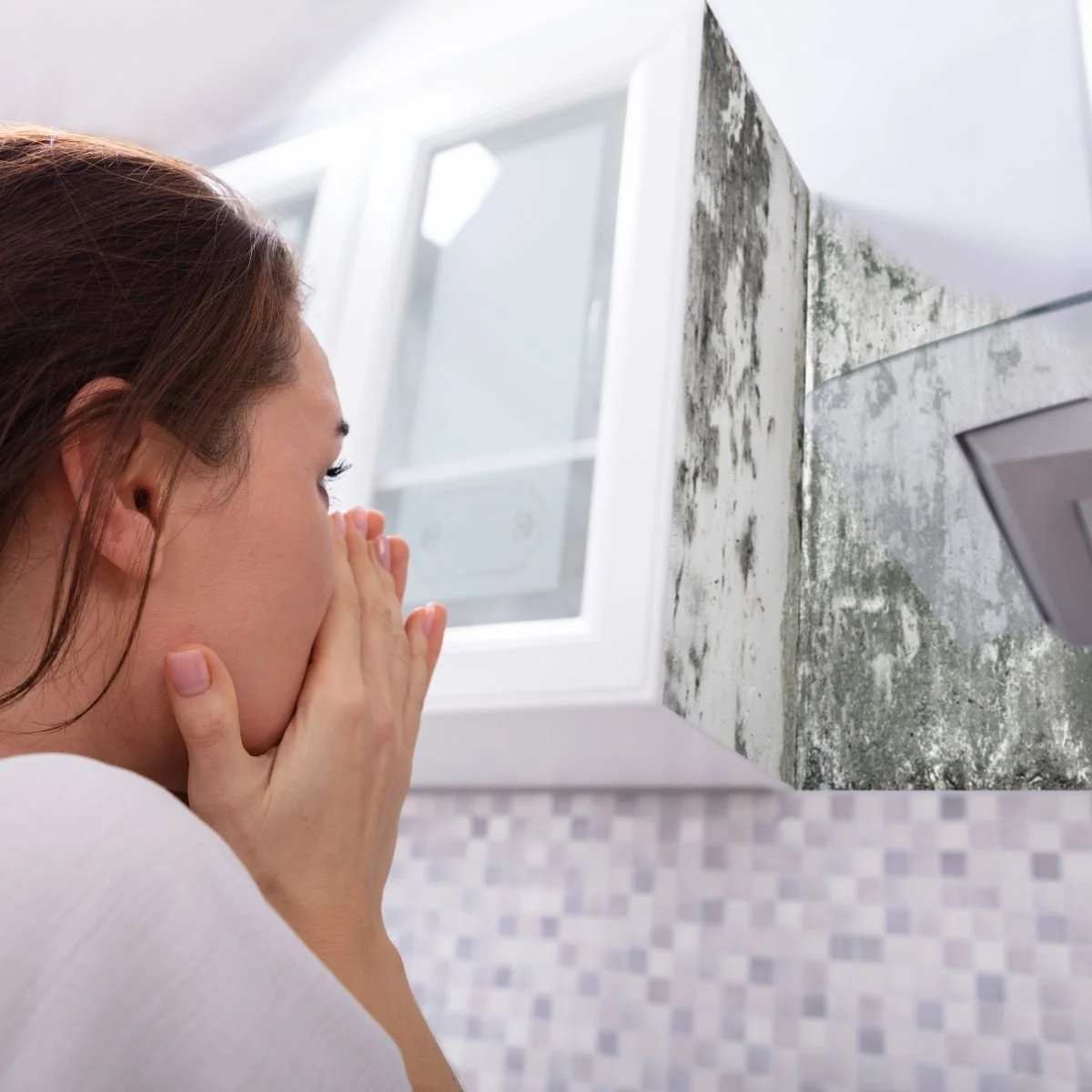
Is mold in a rental property a legal issue in California?
The legal foundation is the implied warranty of habitability, established by the California Supreme Court in Green v. Superior Court (1974) and codified in Civil Code §1941.1. The statute requires landlords to maintain rental units in a condition fit for human habitation, which includes effective waterproofing of the roof and exterior walls, working plumbing, and premises free from conditions that endanger the health or safety of occupants. For a deeper breakdown of how these specific systems are legally categorized under state law, see our guide on California Rental Property Repairs.
Mold's specific status under that framework was clarified by Senate Bill 655 in 2015, which added visible mold growth to the list of substandard housing conditions under Health and Safety Code §17920.3, effective January 1, 2016. The statute carves out one narrow exception: minor mold found on surfaces that accumulate moisture as part of their normal, intended use, such as grout lines in a well-maintained shower. Everything beyond that threshold is a code-enforceable substandard state and considered an example of uninhabitable conditions in a California rental.
A tenant who photographs visible mold growth, sends a written complaint to the landlord, and contacts a code enforcement officer has started a legal process, not a maintenance request. A code enforcement officer can declare the unit substandard based solely on visible mold. That declaration triggers consequences most landlords don't anticipate until they're already dealing with them.
Who is responsible for mold in a rental property: landlord or tenant?
Responsibility for mold follows the moisture source. Landlords are responsible for structural conditions that allow water into the building or allow it to accumulate, including:
Roof leaks and failed waterproofing on exterior walls
Broken or leaking plumbing
Inadequate ventilation systems
Compromised window and door seals
When mold results from any of these conditions, the landlord is obligated to remediate it, regardless of how long the moisture problem existed before anyone noticed the mold.
Tenants carry their own obligations under Civil Code §1941.2. They must maintain the unit in a clean and sanitary condition, use fixtures in a reasonable manner, and notify the landlord in writing when they become aware of conditions that could lead to deterioration. A tenant who notices a slow leak under the sink, says nothing for six months, and then reports extensive mold growth in the cabinet, has contributed to the condition. SB 655 specifically provides that a landlord's duty to inspect or repair mold does not arise until the landlord receives notice of the condition. No notice, no duty. But once notice is given, the clock starts.
The burden of proving tenant fault often falls on the landlord. Courts will not automatically assume tenant negligence; the landlord must affirmatively demonstrate that the tenant's conduct caused the moisture problem, that the tenant failed to report a condition they were aware of, or that the tenant refused reasonable access for inspection. In disputed cases, this comes down entirely to what is documented. This exposure expands significantly if an unvetted, unauthorized person is residing in the unit. To protect your investment from this specific type of risk, read our strategic overview on tenant vs. occupant distinctions in California.
What should a landlord do if mold is found?
The sequence matters as much as the actions themselves. When a mold complaint arrives, here is how to respond to the tenant mold complaint and the order of operations:
Respond in writing within one business day. If possible, within the same day. Acknowledge receipt of the complaint, confirm that the landlord takes it seriously, and state that an inspection will be scheduled. Silence, or a verbal reply with no written record, creates a documentation gap that will be difficult to close later.
Inspect before remediating. Scheduling a contractor to treat mold before identifying the moisture source is not only ineffective but also fails to resolve the habitability issue and insulate the landlord from liability. The inspection needs to identify where moisture is entering or accumulating, what materials are affected, and what structural repairs are necessary before any remediation begins.
Provide proper notice before entry. Under SB 655, landlords have the right to enter the dwelling to repair mold-related conditions, provided they comply with the 24-hour notice requirement under Civil Code §1954. If a tenant refuses access after proper notice, that refusal is itself relevant to the responsibility analysis.
Document everything. The complaint, the written response, the inspection findings, the remediation scope, the moisture source repair, and the work completion all need to be preserved in a form that holds up if the tenancy later produces a lawsuit. Dated photographs, written contractor reports, and copies of every communication with the tenant are the evidentiary record that distinguishes a landlord who acted reasonably from one who did not.
For self-managing owners, executing all four steps consistently (across every complaint, every property, every tenancy) is where things break down. PGM builds this sequence into our standard operating procedure for every managed property, so the documentation exists whether or not a dispute follows.

How fast must a landlord fix mold in California?
California law applies a reasonableness standard: after receiving notice of a condition that renders the unit untenantable, the landlord must act within a reasonable time. What counts as reasonable depends on the severity of the condition, the complexity of the repair, and what steps the landlord took after notice.
The 30-day mark is the first legal threshold to understand. Under Civil Code §1942, a tenant who has given notice and waited 30 days without an adequate landlord response is presumed to have waited a reasonable time. At that point, the tenant has the right to repair the condition and deduct the cost from rent, up to one month's rent. The 30 days is a presumption, not a floor. For severe conditions affecting health and safety, courts have found that shorter timelines were reasonable.
If a code enforcement officer has been involved and issued a Notice of Violation, the landlord typically has 35 days to cure the violation before the tenant acquires additional statutory remedies under Civil Code §1942.4, including the right to withhold rent outright. Each day of inaction after a formal notice is not simply a delay. It is evidence in a subsequent claim that the landlord failed to act in good faith. PGM monitors open maintenance items and code notices across our portfolio and escalates unresolved mold issues before the statutory windows close.
Can tenants withhold rent or break a lease due to mold.
Yes, and the conditions that trigger these remedies are more accessible than most landlords expect. Once a landlord has failed to act within a reasonable time after notice, tenants have three escalating remedies available to them:
Repair and deduct. Under Civil Code §1942, the tenant may hire a contractor, pay for the work, and deduct the cost from the following month's rent: up to one month's rent, and no more than twice in a 12-month period. If the landlord then attempts to evict for the resulting underpayment, the tenant's repair-and-deduct right is a complete defense.
Rent withholding. A tenant who has received a code enforcement citation confirming substandard conditions and the landlord has not corrected those conditions within 35 days may stop paying rent entirely under Civil Code §1942.4. A landlord who pursues eviction for nonpayment under these circumstances is filing a case the tenant can defend on habitability grounds, while simultaneously inviting a cross-complaint for breach of the warranty of habitability, actual damages, and attorney's fees. Navigating the exact timelines of rent defaults under these conditions is complex; you can review the standard statutory process in our guide to California rent grace periods and three-day notices.
Lease termination and constructive eviction. If the tenant ultimately vacates because the condition was not remediated, the exposure expands further: the cost of the tenant's replacement housing, other actual damages, potential punitive damages if the court finds the landlord acted in bad faith, and the tenant's attorney's fees.
In cities with local rent ordinances, the penalties can exceed the state minimums. San Francisco's Housing Code allows the Rent Board to reduce a tenant's rent obligation for habitability failures, independent of state-law remedies. Local ordinances in Oakland and Los Angeles operate similarly.
There is also a fair housing dimension. When a landlord cannot produce documentation showing prompt, consistent responses to mold complaints across a portfolio, and the affected tenants are members of a protected class, the pattern can attract scrutiny from the California Civil Rights Department. A failure that looks localized can become a fair housing investigation if the documentation does not support the landlord's response history.
How to properly handle mold remediation
The California Department of Public Health has published remediation guidelines for mold in indoor environments under Health and Safety Code §§26130-26134. Those guidelines require abating the underlying moisture cause alongside removing mold, not instead of it. The practical standard used by insurance carriers and industrial hygienists for remediation scope is the IICRC S520, the industry protocol for professional mold remediation.
For large-scale mold contamination (generally anything covering more than 10 square feet), industry practice calls for CSLB-licensed general contractors who can contain the affected area, protect unaffected materials, and provide documentation of the completed work. Containment matters: remediation work that allows spores to spread to other areas of the unit creates new contamination and new liability.
When remediation is complete, the landlord should obtain written clearance documentation from the contractor or a third-party inspector confirming that the visible mold has been removed, the moisture source has been repaired, and the air quality in the affected areas is acceptable. That clearance report is the proof that the condition was resolved. Without it, a tenant who disputes the adequacy of the remediation six months later leaves the landlord with little to show. PGM requires clearance documentation on every remediation we coordinate and keeps it as part of the permanent property record.
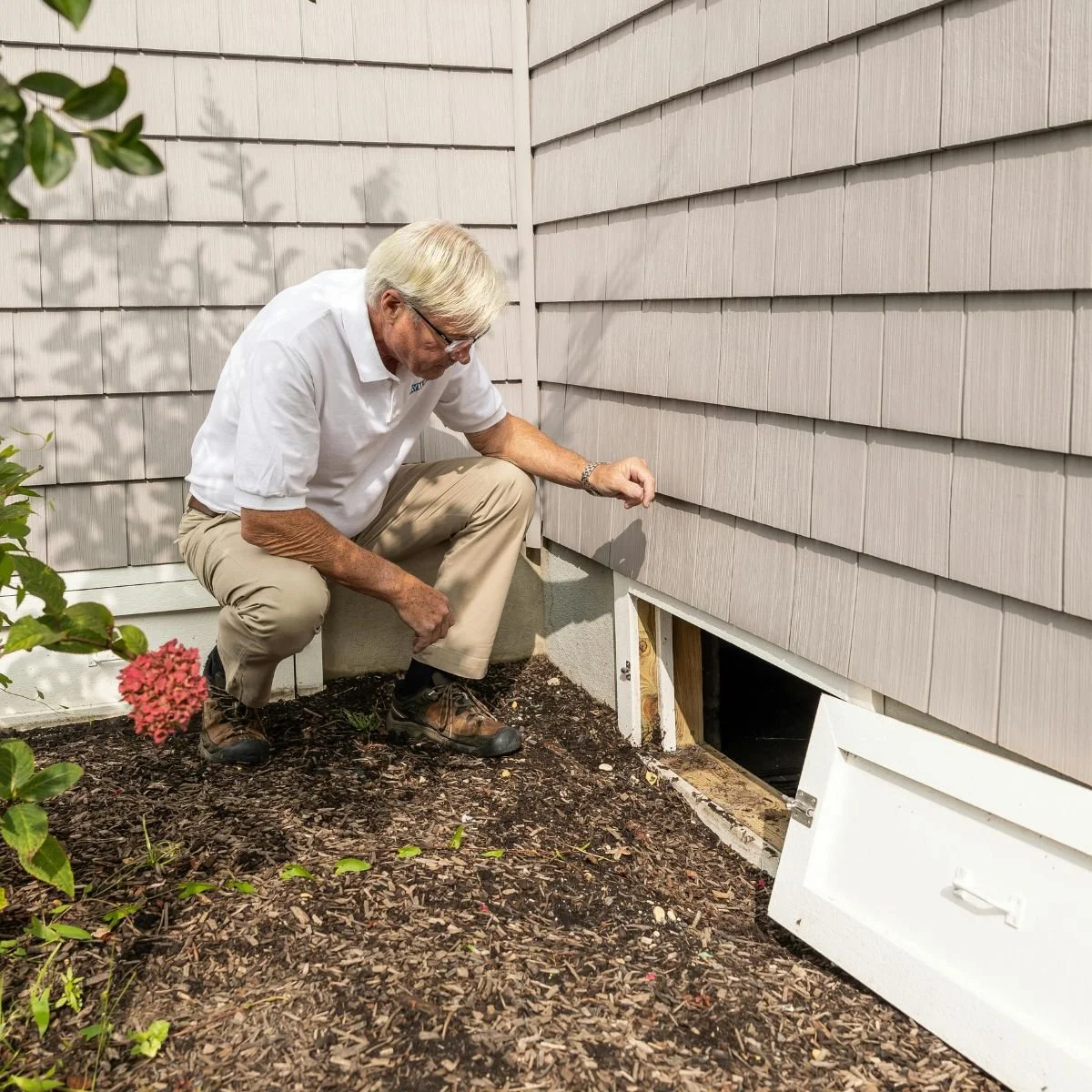
Can tenants stay in the unit during mold remediation
It depends on the scope of the work, and getting that call wrong creates problems in both directions.
For minor remediation confined to a single surface area with no structural involvement, tenants can generally remain in the unit if the affected area is properly contained and the work is completed quickly. This aligns with EPA guidance that small mold areas (<10 sq. ft.) can be cleaned with proper precautions, and OSHA's classification of small-area remediation not requiring full containment.
Temporary tenant relocation is functionally mandatory for major remediation projects. You must plan for tenant displacement if the scope of work involves:
Structural Demolition: Tearing out drywall, breaching wall cavities, or replacing subfloors.
HVAC Remediation: Cleaning or replacing contaminated ductwork.
Containment Limits: Any scenario where airtight barriers cannot completely isolate the work zone from the tenant's remaining living space.
The IICRC S520 requires a controlled, isolated workspace that is fundamentally unlivable for a tenant. Furthermore, if an occupant has allergies or a respiratory condition, the risk spikes immediately. Allowing a vulnerable tenant to remain in the property during remediation is a massive liability.
What are the landlord's relocation obligations
California law doesn't specify a uniform relocation benefit for remediation-related displacement the way it does for no-fault evictions, but that doesn't mean landlords can displace tenants without cost. Several overlapping obligations apply:
Temporary relocation expenses. If the unit is rendered untenantable and the landlord requires the tenant to vacate for repairs, California state law doesn't explicitly mandate a temporary relocation payment; however, courts have held that landlords may be responsible under the implied warranty of habitability when displacement is required. Some local ordinances explicitly require landlords to pay reasonable temporary housing costs.
Rent abatement during displacement. A tenant who vacates at the landlord's direction is not occupying the unit. Charging full rent during that period invites a habitability defense and, in some cases, a claim for rent already paid. The standard practice is to suspend or pro-rate rent for the period the tenant is out of the unit. This is required under SB 610 when evacuation is government-mandated, and under the implied warranty of habitability for other cases.
Local ordinance requirements. Several California cities go further than state law. San Francisco, Los Angeles, and Oakland each have local ordinances that impose specific relocation payment requirements when tenants are temporarily displaced due to habitability conditions, including remediation. If your property is in a city with a rent ordinance, the local requirements control, and they are often more demanding than the state baseline.
Notice and timeline obligations. Tenants must receive reasonable advance notice of the displacement and a realistic timeline for return. Telling a tenant they need to leave for "a few days" and then extending the work twice creates liability exposure. If the tenant incurred additional costs due to an extended timeline caused by inaccurate information, the tenant may have a claim for damages. Build buffer into the timeline you communicate, confirm extensions in writing as soon as they become apparent, and keep the tenant informed at every stage.
What if the tenant refuses to vacate
This is where the situation can become genuinely complicated. A tenant who refuses to leave during remediation that requires displacement puts the landlord in a difficult position: proceeding with remediation around an occupant may be unsafe and will likely be ineffective; not proceeding leaves an unresolved substandard condition on the record.
The landlord's right to enter for repairs under Civil Code §1954 does not include the right to compel the tenant to vacate. If a tenant refuses to leave voluntarily, the landlord's options narrow quickly.
Court-ordered access is possible but slow. The more practical path is usually to document the refusal in writing, confirm in the same communication that the landlord is ready to proceed and willing to cover relocation costs, and make clear that the tenant's refusal is preventing remediation from occurring. That written record matters if the tenant later claims the landlord failed to remediate.
If the refusal is unreasonable and the unit has been cited as substandard, the tenant's refusal to allow access is itself relevant to the habitability analysis. Courts are not uniformly sympathetic to tenants who block remediation and then claim the condition was never fixed.
How to prevent mold in rental properties
The most defensible mold management program is one that prevents mold from becoming a legal issue in the first place. The core practices are:
Routine inspections. At lease renewal, after significant rainfall events, and whenever maintenance work involves plumbing or roofing, inspections catch moisture intrusion before it becomes visible mold growth. Older Sacramento-area properties built before 1980 often lack modern vapor barriers and may have original plumbing prone to slow leaks; these warrant more frequent attention.
Lease clauses requiring tenant reporting. Clauses that require tenants to report water intrusion, leaks, or moisture problems in writing within a specified timeframe serve two purposes: they create a contractual basis for the responsibility analysis if mold later develops without prior notice, and they establish the communication norm that generates the written record both parties need.
Tenant education at move-in. Educating tenants about ventilation (e.g., running exhaust fans during and after showers, reporting any condensation on walls, and not blocking ventilation openings) reduces moisture accumulation caused by tenant behavior.
Prompt repairs. A routine inspection that catches a failed caulk joint around a tub surround costs the price of the inspection and a simple repair. The same failed joint, undiscovered for a year, can lead to mold growth behind the wall, a substandard housing citation, a rent-withholding dispute, and a remediation bill that includes structural drywall replacement.
How professional property management helps prevent and handle mold issues
Park Glen Management was co-founded and continues to be operated by a real estate attorney who handles California habitability issues daily. When a mold complaint comes in, our response is procedural by design, not reactive.
What that means in practice:
Immediate written response and documentation. When a tenant reports mold or moisture to PGM directly, we respond in writing within 24 business hours and begin the documentation. The complaint, our acknowledgment, and every subsequent action are date-stamped and preserved.
Inspection before remediation. Upon receiving notice of a mold concern, PGM sends a trusted vendor to assess the situation and begin the initial response. Initial assessments and actions taken vary depending on the situation, but may include a home test, professional air and surface tests, cleaning, and any other step deemed pertinent for that specific situation.
Vetted contractor coordination. In situations where professional remediation is required, we work with CSLB-licensed contractors who provide written scopes of work, containment protocols, and post-remediation clearance documentation. That clearance report becomes part of the property's permanent file.
Tenant communication management. We manage all written communication with the tenant throughout the remediation process, ensuring that every step is documented and that the tenant is appropriately notified under Civil Code §1954. If a tenant disputes the adequacy of the remediation, the file contains the evidence to respond.
Portfolio-level monitoring. We track maintenance and complaint histories across every property we manage. When a property has a recurring moisture issue, we increase inspection frequency in the management schedule and notify the owner before a pattern develops.
If you own rental property in California and have received a mold complaint, have an unresolved moisture problem, or have a code enforcement notice you have not yet responded to in writing, that gap is already a liability. The owners who face the steepest exposure are not the ones who refused to act. They are the ones who acted informally, without documentation, and had nothing to show for it when the dispute arrived.
The Sacramento landlord in the opening scenario probably thought he was handling it. He told the tenant to try bleach. He scheduled a handyman. He didn't ignore the complaint; he just didn't understand what the law required, didn't document what he did, and by the time he realized the situation had escalated, sixty days had passed, and he was already in it.
That's the gap Park Glen Management exists to close. If you own rental property in California and have received a mold complaint, have an unresolved moisture problem, or have a code enforcement notice you haven't responded to in writing, contact PGM to schedule a consultation.
Let's start a conversation about how Park Glen Management can protect and grow your real estate investments.
📞 (916) 269 - 9288